
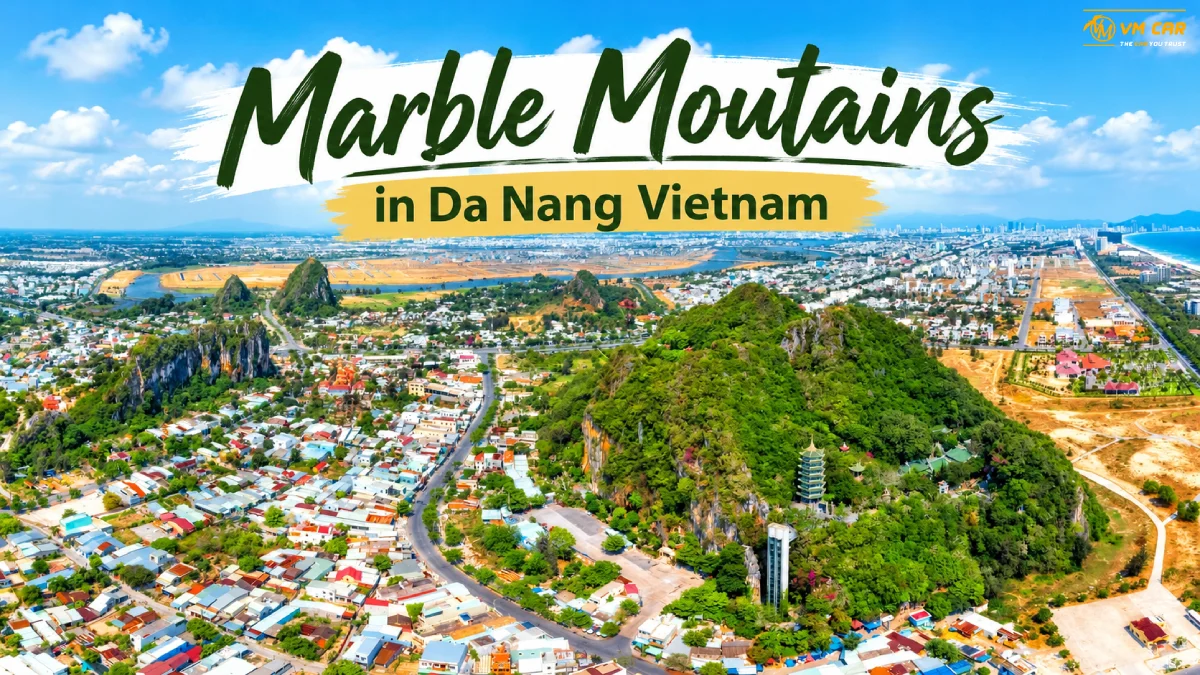
Marble Mountains in Da Nang is a fascinating attraction featuring natural caves, ancient pagodas, spiritual sites, and beautiful viewpoints, perfect for travelers. Located between Da Nang and Hoi An, this unique destination is easy to include in your Central Vietnam itinerary. However, knowing the entrance fees, opening hours, best time to visit, and a few practical tips can make your experience much more enjoyable. In this guide, VM Car will help you discover everything you need to know about visiting Marble Mountains Vietnam, from tickets and opening hours to useful travel tips.
1. About Marble Mountains in Da Nang Vietnam
1.1 Location of Marble Mountains Vietnam
Marble Mountains Vietnam is located at 81 Huyen Tran Cong Chua Street in Ngu Hanh Son Ward, about 8 km southeast of central Da Nang.
Marble Mountains sits between central Da Nang and Hoi An. Its location makes it convenient to combine with Non Nuoc Beach, Hoi An Ancient Town, or other attractions in the city.
For travellers searching for Marble Moutains Vietnam, this is the destination most commonly meant by the name. The mountains are close to the sea and the former Co Co River route. The surrounding landscape includes residential areas, beaches, rivers, and limestone peaks.
Marble Mountains covers a broad landscape rather than a single mountain. Therefore, allow enough time for walking between caves, temples, stairs, and viewpoints.
Marble Mountains Da Nang location on Google Maps:
1.2 History of the name “Marble Mountains”
The Vietnamese name Ngu Hanh Son means “Five Element Mountains.” It refers to the traditional five elements of metal, wood, water, fire, and earth.
Marble Moutains in Da Nang received its official mountain names during the reign of Emperor Minh Mang. In 1837, during his third visit to the area, he issued names for the mountains based on the five elements. Thuy Son represents water, Kim Son represents metal, Moc Son represents wood, Hoa Son represents fire, and Tho Son represents earth.
The area also has older names. Local people have long used Non Nuoc, while historical documents mention names such as Ngu Uan Son. The English name “Marble Mountains” relates to the marble associated with the area.
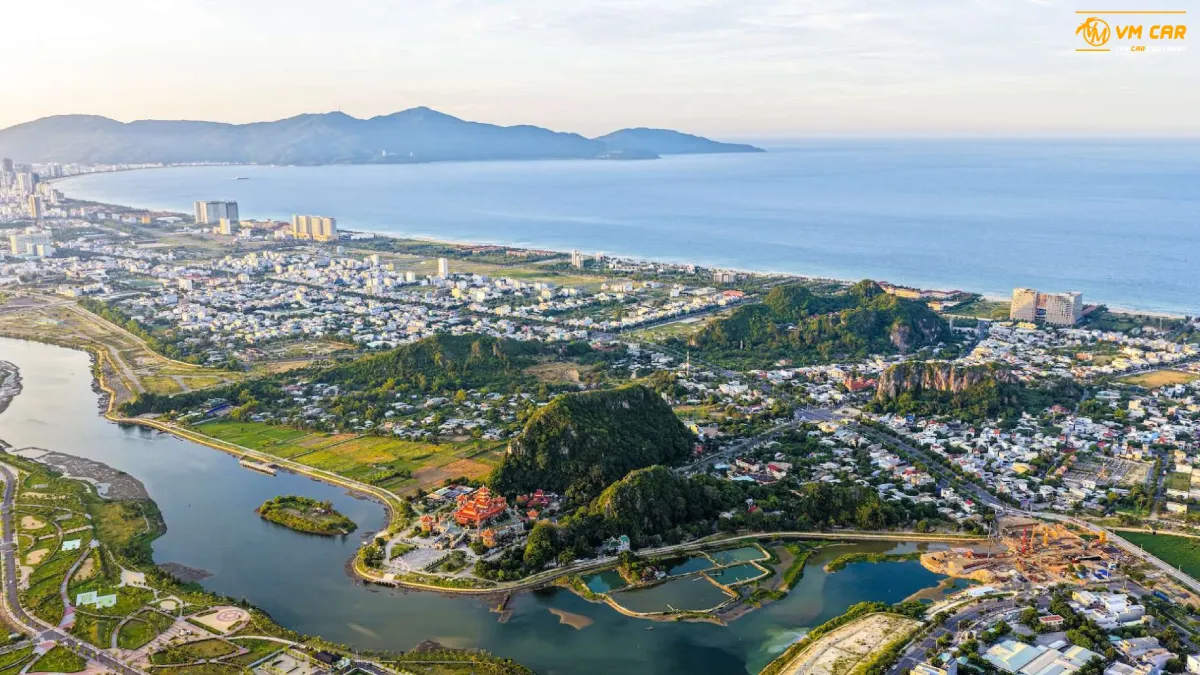
When exploring Marble Mountains Vietnam, you’ll discover a distinctive group of limestone and marble peaks in Da Nang. The name reflects the area’s geology and its long cultural history.
The history is not limited to the names of the mountains. The caves also preserve Ma Nhai inscriptions. These carved texts record religious, cultural, and historical information from different periods.
Today, the name Marble Moutains is widely recognised among international travellers. The Vietnamese name remains equally important because it explains the cultural idea behind the five-element landscape.
1.3 Marble Mountains Da Nang opening hours
Marble Mountains Da Nang is open daily from 7:00 AM to 5:30 PM, including weekends and public holidays. This schedule is useful when planning either a morning or afternoon visit.
VM Car recommends visiting Marble Mountains Da Nang early, especially during the hotter months. The stone steps can get warm under the sun, while an early start makes the walk more comfortable.
If you want to visit Am Phu Cave, plan enough time before closing. The cave has a separate entrance ticket, so it is better to include it in your route from the beginning.
Opening hours may change because of local events, maintenance, weather, or operational arrangements. Checking the latest information before departure is therefore a sensible step.
1.4 Marble Mountains Da Nang entrance fees 2026
Here are the 2026 reference entrance fees for Marble Mountains Da Nang:
| Item Ticket | Adults | Children (under 6) |
|---|---|---|
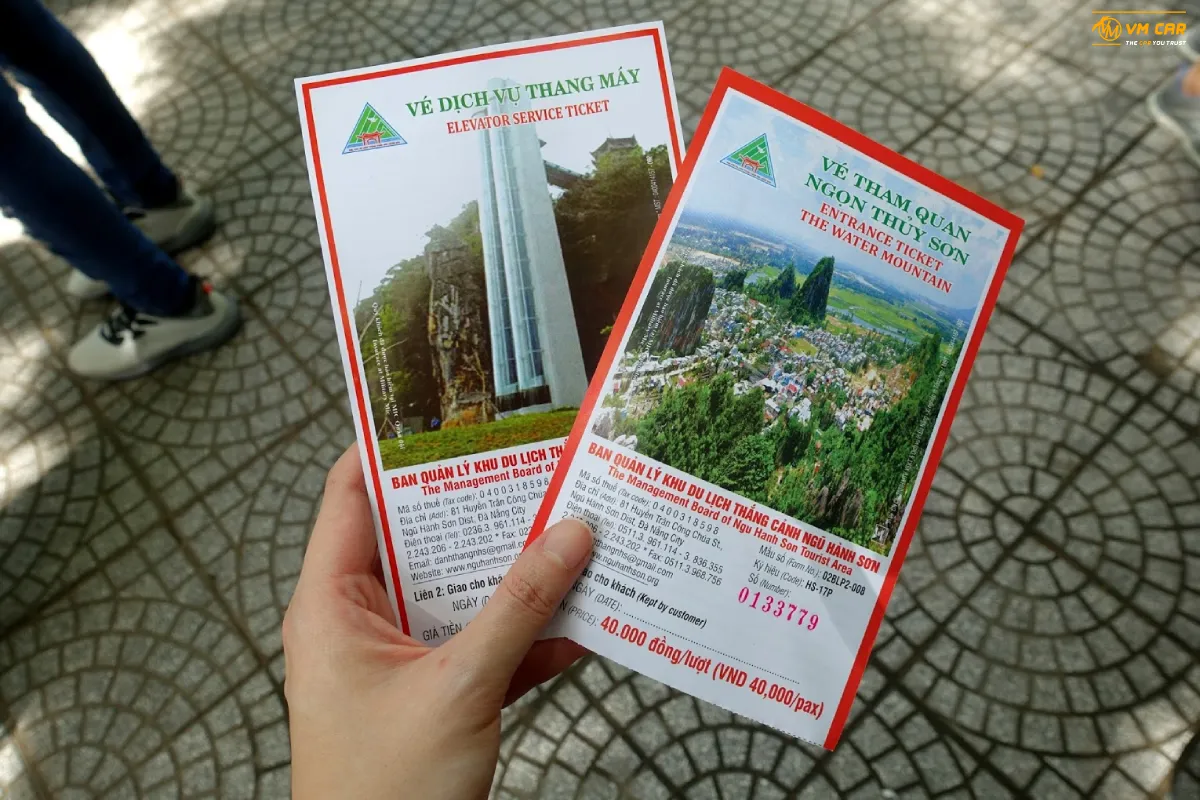
| Thuy Son | 40,000 VND | Free |
| Am Phu Cave | 20,000 VND | Free |
| Elevator – one way | 15,000 VND | |
| Elevator – round trip | 30,000 VND | |
| Non Nuoc Stone Carving Village and other mountains | Free | |
A Thuy Son entrance ticket gives access to the main mountain sightseeing area. The elevator is an optional service and does not replace the entrance ticket.
2. Must-see attractions at Marble Mountains in Da Nang
The easiest way to understand Marble Moutains in Da Nang is to see it as a group of different experiences. Thuy Son provides the largest concentration of attractions. The other peaks offer quieter and more specialised stops.
2.1 Thuy Son – the largest and most impressive peak
For a first visit to Marble Moutains Da Nang, Thuy Son is the main mountain to explore. It is the largest and highest peak in the complex, with recent local information placing its height at about 106 metres.
The mountain contains Huyen Khong Cave, Am Phu Cave, Tam Thai Pagoda, Linh Ung Pagoda, and Vong Giang Dai. Stone steps connect the main attractions, although some sections are steep and uneven.
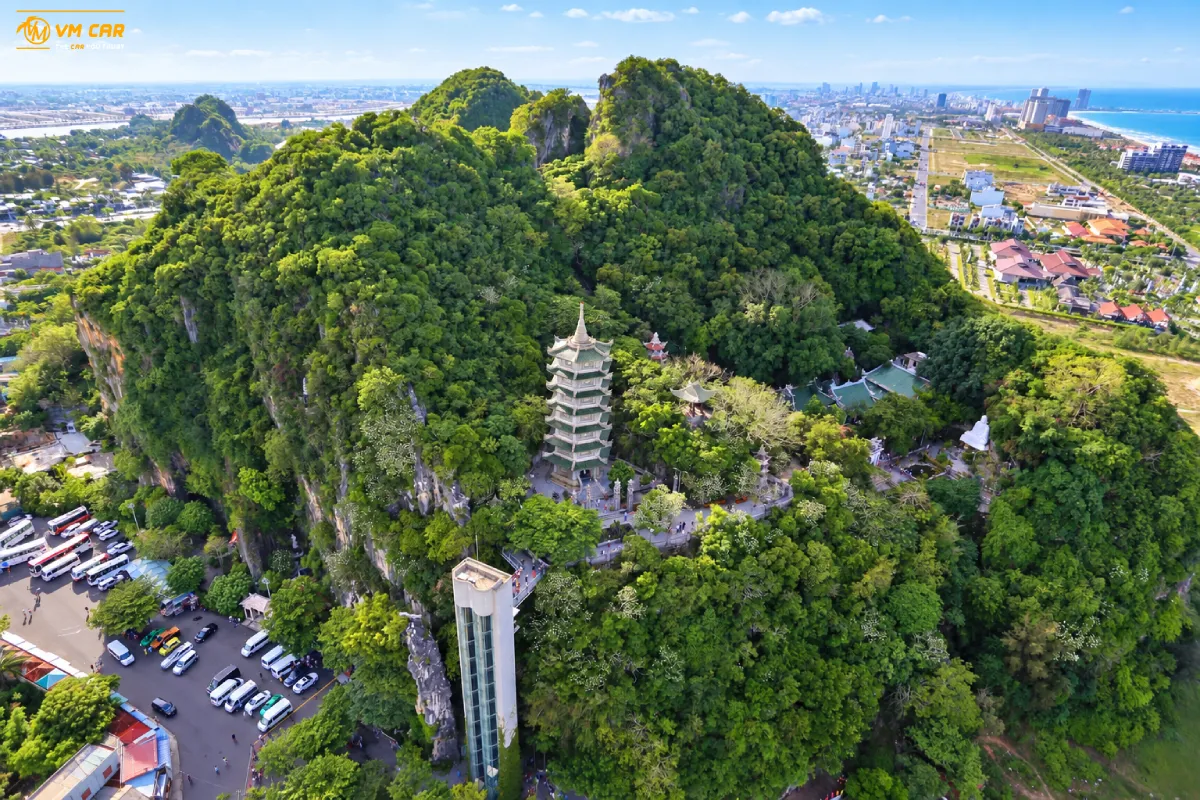
The upper areas provide views over the surrounding city, mountains, and coastline. If you have limited time, VM Car recommends prioritising Thuy Son because it offers the best combination of scenery, caves, history, and religious architecture.
2.2 Kim Son – home to Quan The Am Pagoda
At Marble Moutains Da Nang, Kim Son is associated with Quan The Am Pagoda and a cave that extends for more than 50 metres. Inside the cave, natural formations create striking shapes, including one associated with Quan The Am Bodhisattva.

The area is also connected with the annual Quan The Am Festival. This event reflects the long Buddhist tradition of the area and attracts visitors interested in culture and religion.
Kim Son is a good choice for travellers interested in Buddhist traditions. Its setting near the former Co Co River also gives this part of the complex a different atmosphere from the busier Thuy Son area.
2.3 Moc Son and its white marble Quan Am statue
Within Marble Moutains Da Nang, Moc Son is smaller and less developed for sightseeing than Thuy Son. One of its most distinctive features is a white marble rock formation that resembles a seated person.
Local people have traditionally referred to this formation as Ba Quan Am or Co Mu. Unlike Thuy Son, Moc Son has fewer religious structures and less vegetation.
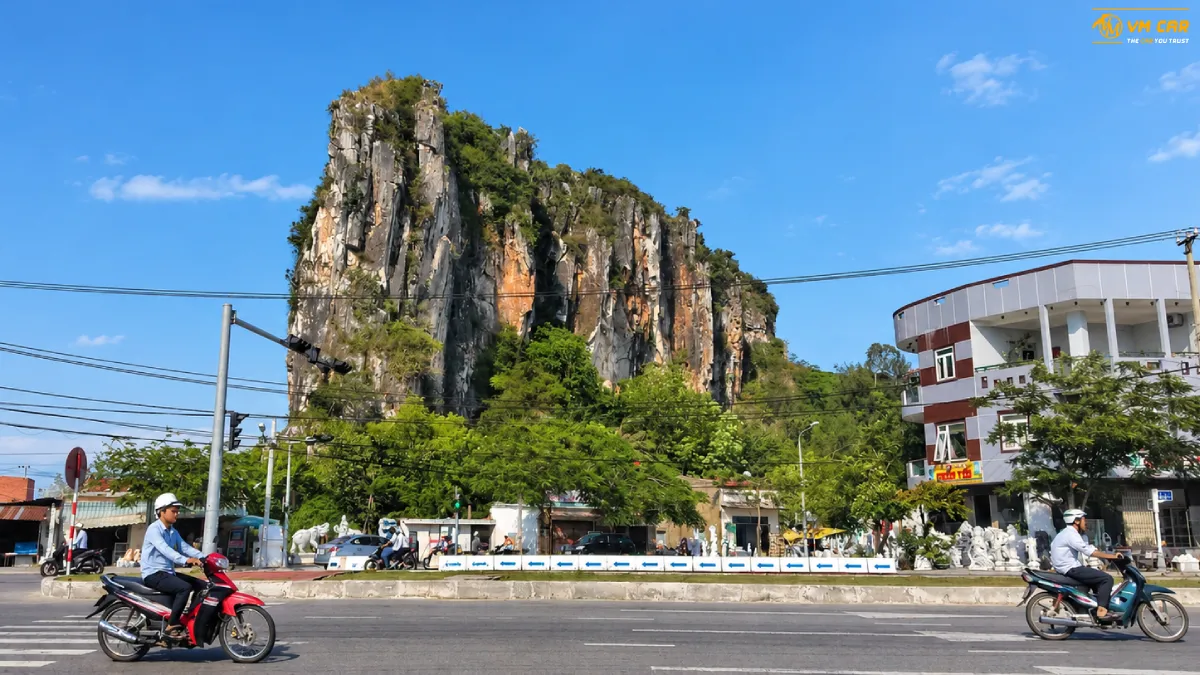
The quieter character of Moc Son makes it interesting for travellers who want to see another side of the complex. It is not usually the first stop for a short visit, but it adds context to the five-element landscape.
2.4 Linh Ung Pagoda and its spiritual atmosphere
At Marble Moutains Da Nang, Linh Ung Pagoda is one of the best-known religious landmarks on Thuy Son. The pagoda is closely connected with the history of the site and sits among the rocks and trees of the mountain.
The temple complex contains a range of Buddhist statues and worship spaces. Visitors can see representations of several important figures in Vietnamese Buddhist practice.
The setting is one of the main attractions. Instead of standing in a busy urban environment, the pagoda is surrounded by stone cliffs and greenery.
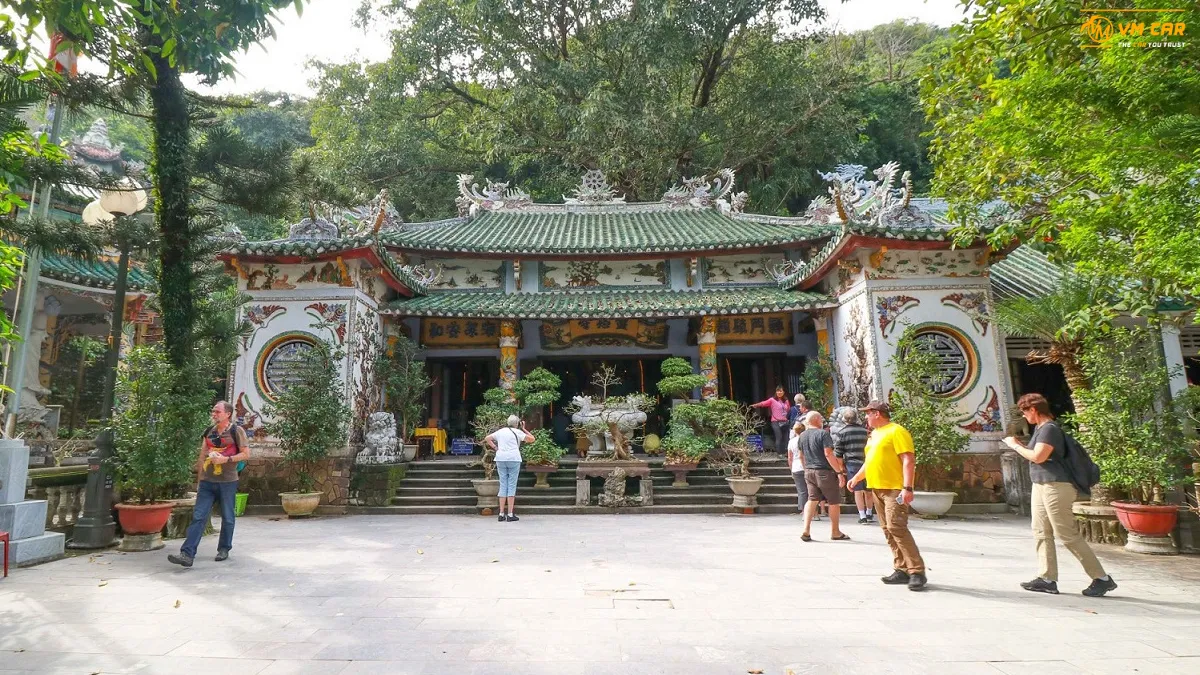
Visitors should dress respectfully and keep their voices low in worship areas. Photography may be possible, but it is better to follow any signs or local instructions.
2.5 Hoa Son – a pair of scenic limestone peaks
At Marble Moutains Da Nang, Hoa Son is a mountain group with two peaks: Duong Hoa Son and Am Hoa Son. The two peaks have different landscapes and features.
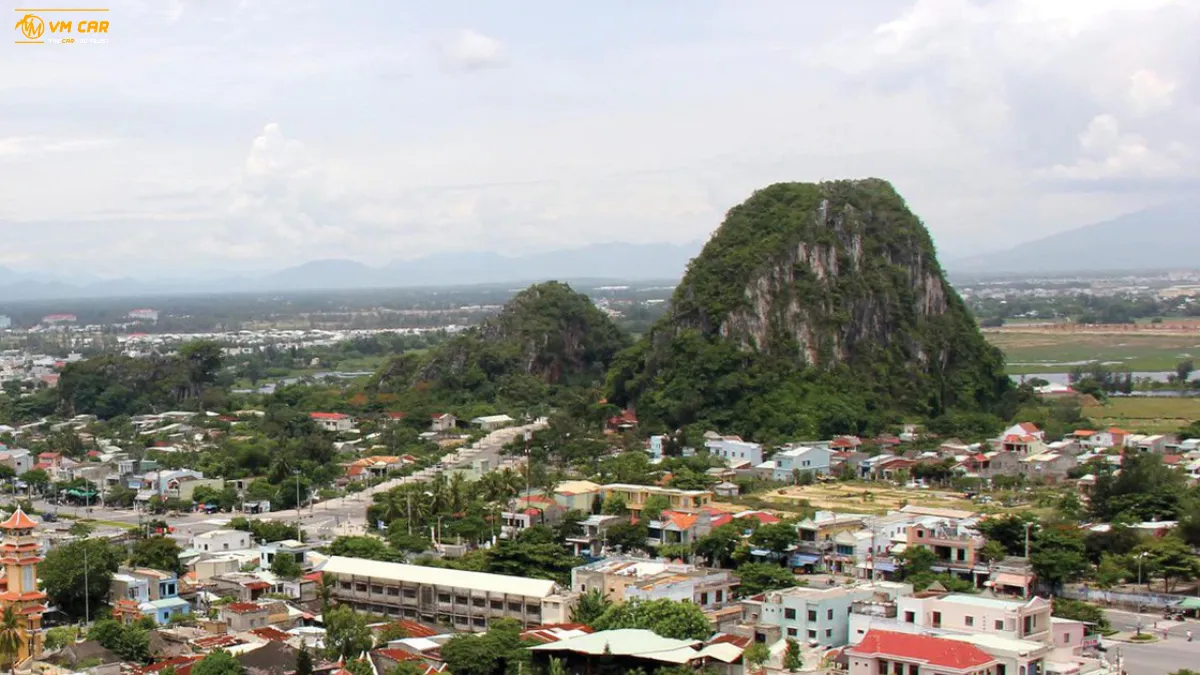
Am Hoa Son is known for exposed rock surfaces, unusual stone textures, and a cave that passes through the mountain. Duong Hoa Son contains Linh Son Pagoda and Huyen Vy Cave.
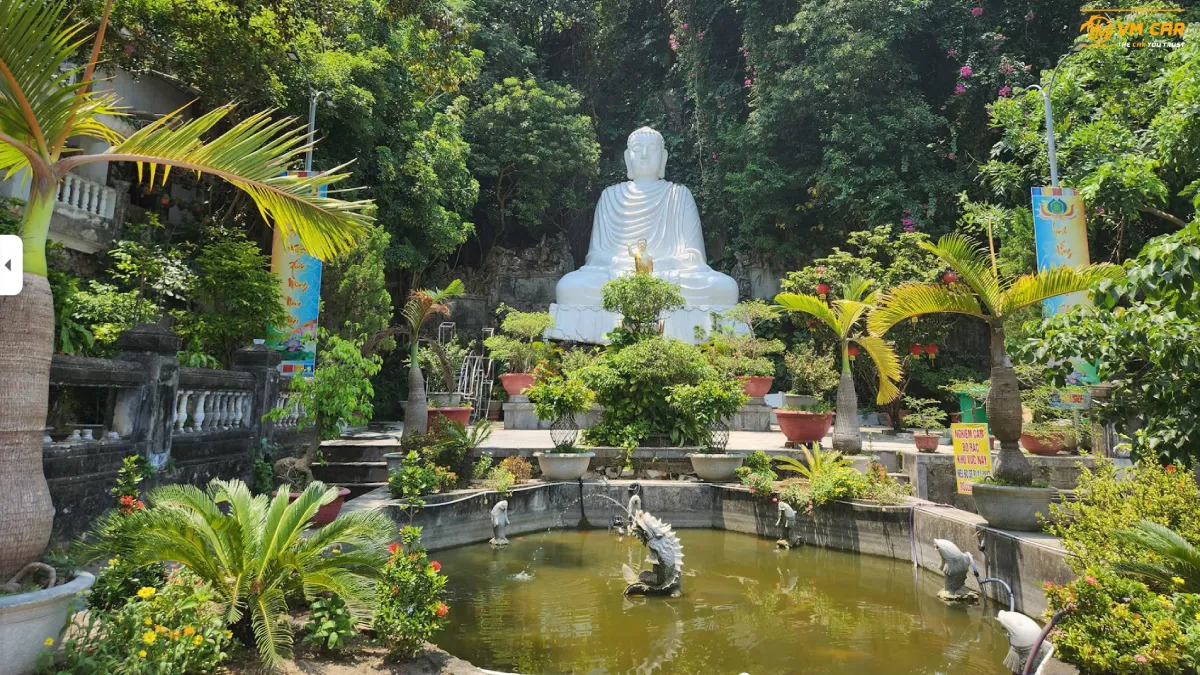
Hoa Son is less central to the standard tourist route. However, it is valuable for travellers who want to explore beyond the most photographed locations.
2.6 Tho Son – home to a historic tunnel and ancient pagodas
Tho Son is a relatively low mountain with steep rock faces. The area has fewer trees and a more rugged appearance than some of the other peaks.
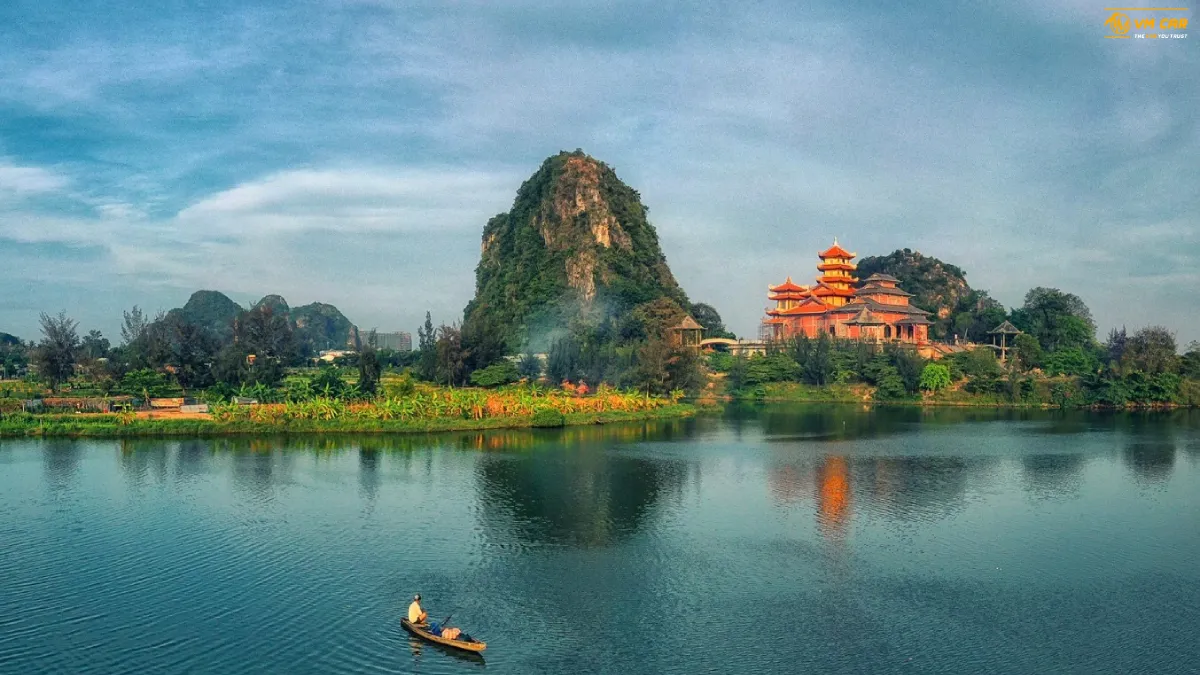
A narrow cave on the eastern side extends about 20 metres into the mountain. Another important site is Bo De Cave, also known as Da Chong Mountain Tunnel.
The tunnel has historical significance because it was used as a hiding and working place by revolutionary forces during wartime. This gives Tho Son an important historical dimension beyond its natural scenery.
2.7 Am Phu Cave – a mysterious underground world
At Marble Moutains Da Nang, Am Phu Cave is one of the most unusual attractions in the complex. The name can be translated as “Hell Cave,” and the interior is designed around traditional Buddhist ideas of the underworld.
The route includes areas representing heaven and hell. Visitors pass through sections depicting judgement, punishment, and spiritual reflection. The cave has 12 symbolic gates of hell in its traditional presentation.
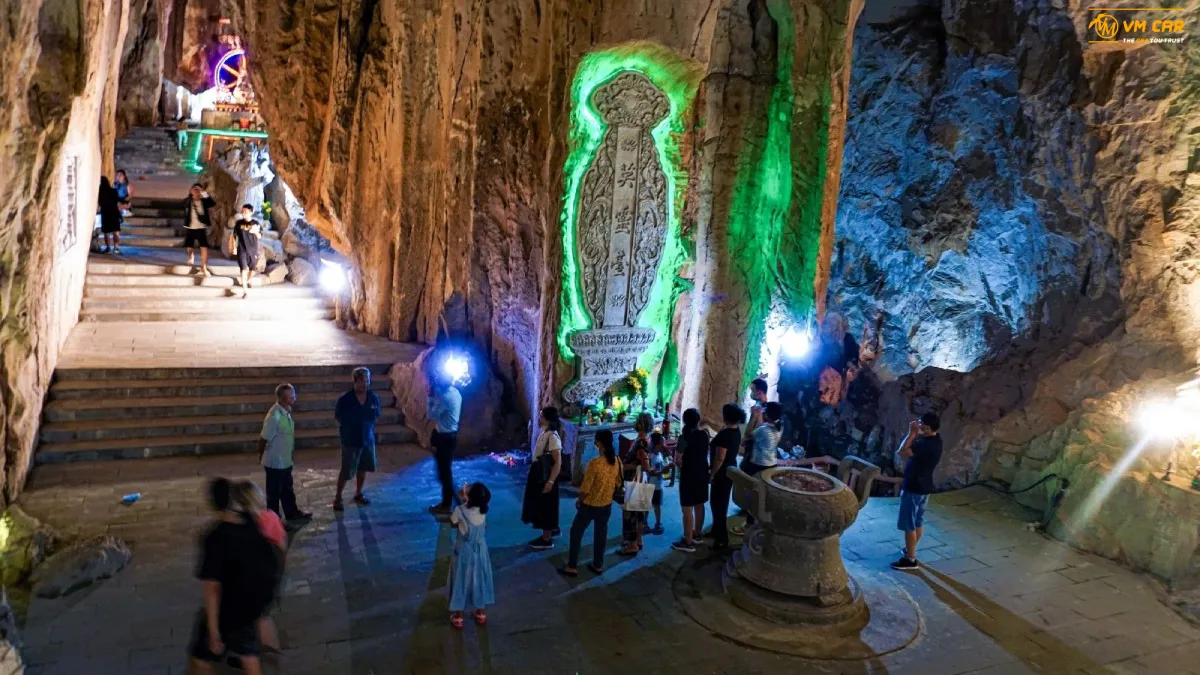
The cave is darker and more atmospheric than Huyen Khong Cave. Some sections involve stairs and uneven surfaces, so comfortable footwear is useful.
2.8 Huyen Khong Cave – a spectacular natural sanctuary
Huyen Khong Cave is one of the highlights of Thuy Son. It is an open cave where sunlight enters through openings in the rock above.
The changing natural light creates a dramatic atmosphere inside. The cave also contains religious shrines, making it both a geological and spiritual attraction.
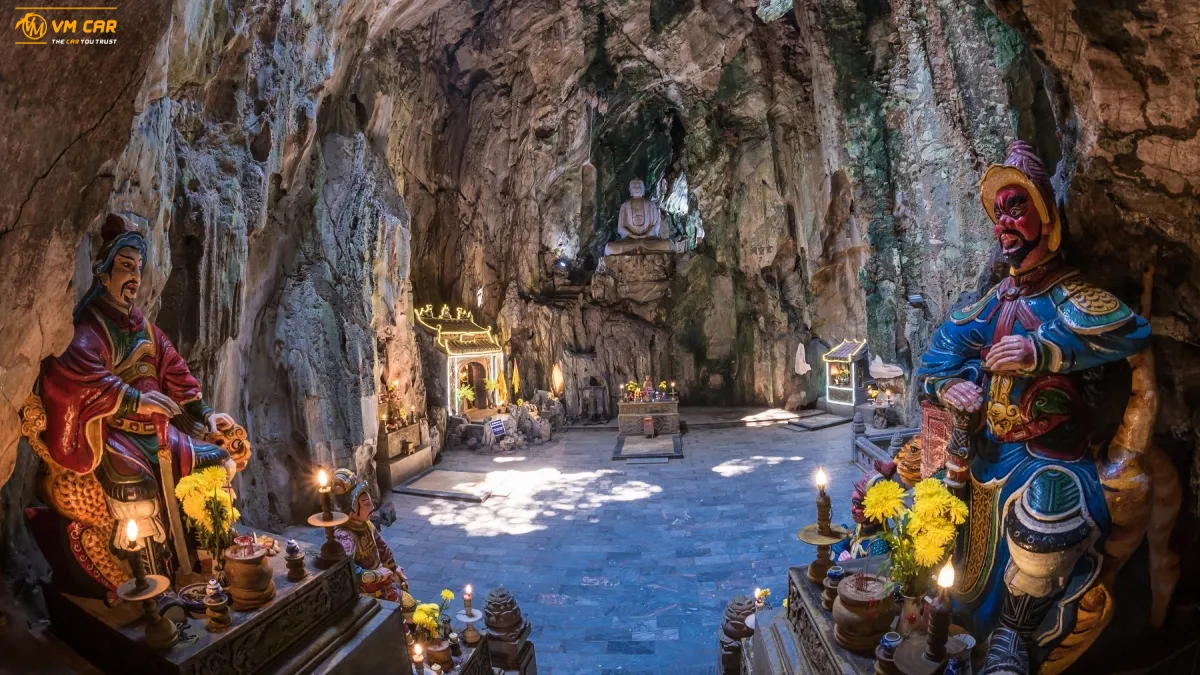
The entrance is broad and high, while the interior opens into a spacious chamber. The combination of natural light, limestone walls, and Buddhist worship spaces makes it one of the most memorable places to visit.
For photography, morning and early afternoon can provide interesting changes in light. However, avoid blocking worship areas or disturbing people who are praying.
2.9 Tam Thai Pagoda – a historic Buddhist landmark
Tam Thai Pagoda is one of the oldest and most important pagodas on Thuy Son. Local tourism information places its origins in the 17th century, with later restoration during the Nguyen Dynasty.
The pagoda sits among the mountain landscape and has a traditional Buddhist atmosphere. Its main worship area contains statues associated with Vietnamese Buddhist practice.
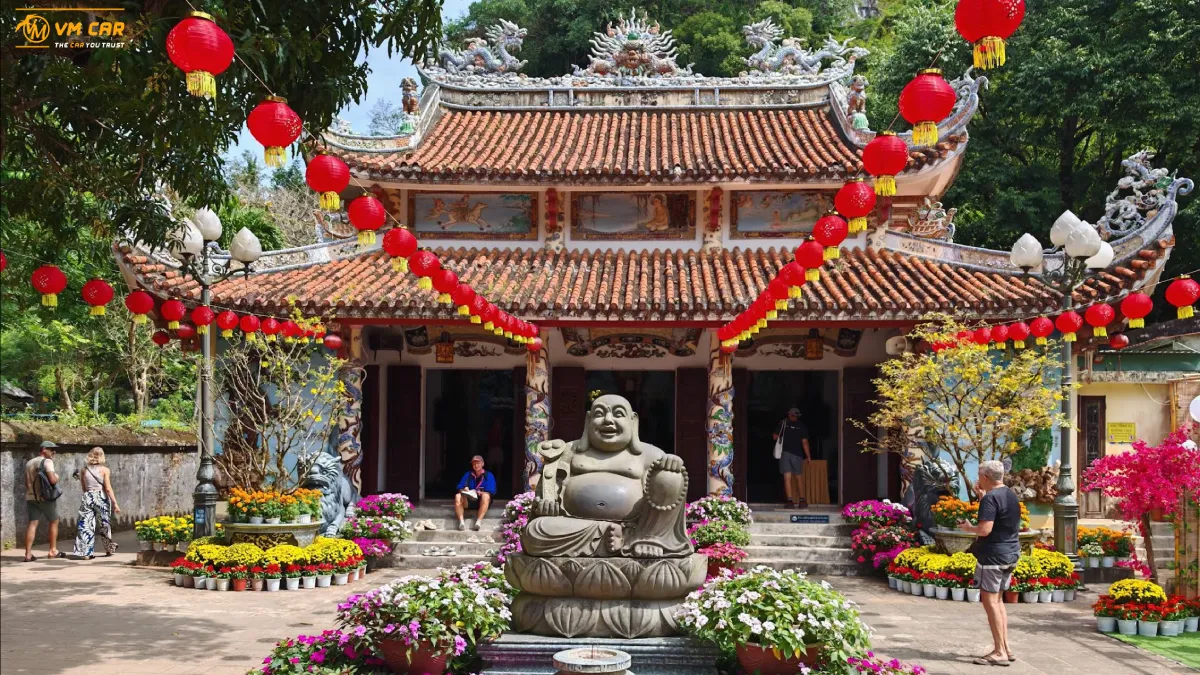
The combination of old architecture, stone paths, trees, and surrounding cliffs makes Tam Thai an important stop on the Thuy Son route.
2.10 Vong Giang Dai – a panoramic viewpoint
Vong Giang Dai is a viewpoint on Thuy Son. Its name is associated with looking over the rivers and surrounding landscape.
From here, visitors can see parts of the former Co Co River route and the wider area around the mountain. The viewpoint is also a useful place to pause after climbing the stone steps.
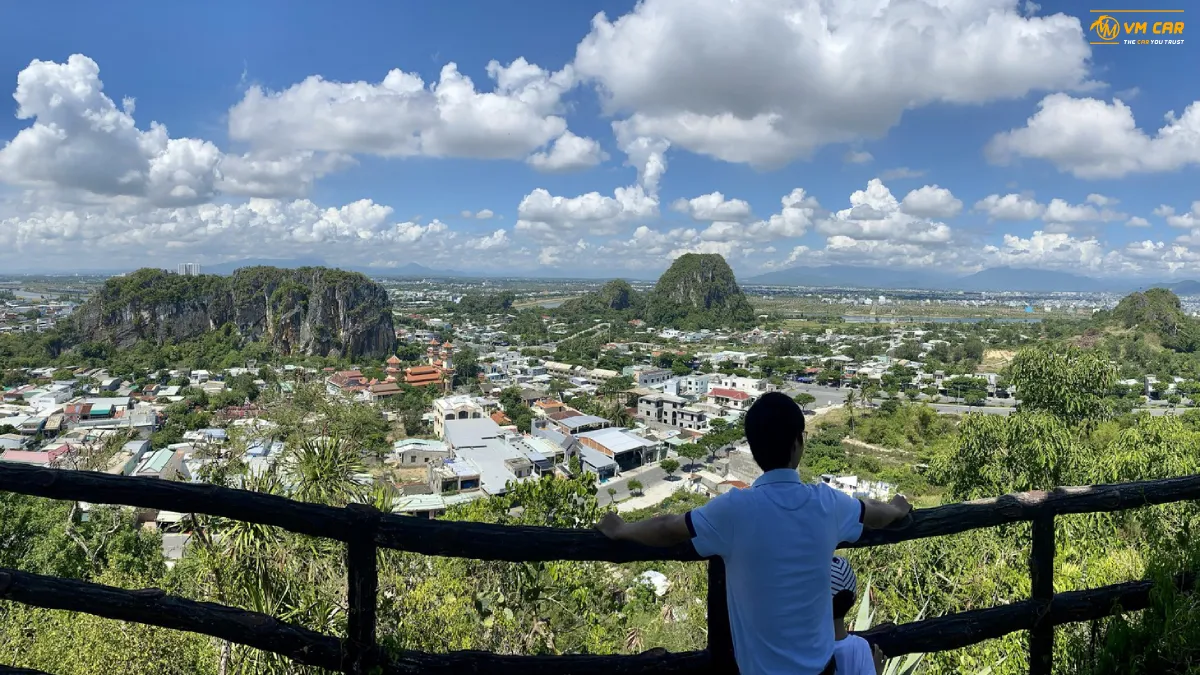
VM Car recommends adding Vong Giang Dai to your route because it requires little extra time when combined with Tam Thai Pagoda.
2.11 Non Nuoc stone carving village – a traditional craft village
At the foot of Marble Mountains, Non Nuoc stone carving village offers a different experience. The village has a long history of stone carving and is closely connected with the cultural identity of the area.
Local artisans produce sculptures and decorative works using traditional techniques. Walking through the workshops gives visitors an opportunity to see how stone is shaped, polished, and turned into detailed artwork.
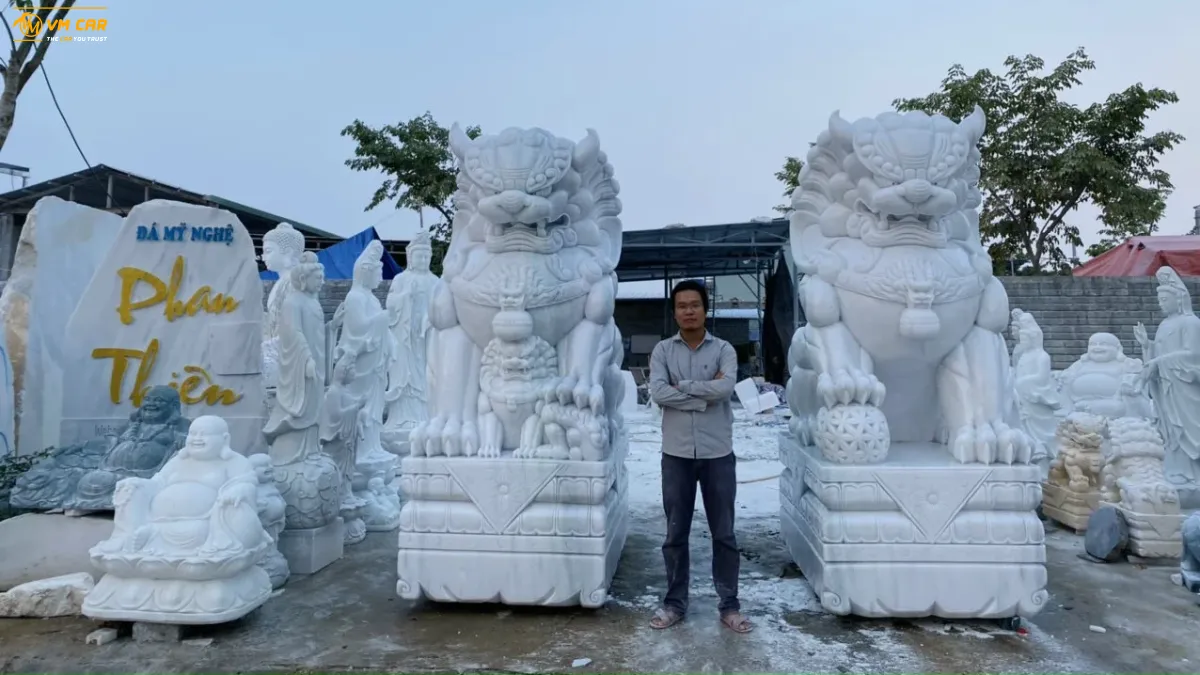
The craft tradition dates back centuries and has become an important part of the heritage around the mountains.
If you plan to buy a stone product, check its size and weight before travelling. Smaller items are easier to pack and carry.
2.12 Non Nuoc Beach – a beautiful coastal escape nearby
Non Nuoc Beach is close to the Marble Mountains complex, making it an easy addition to a sightseeing day. After climbing the stairs and exploring the caves, many travellers enjoy taking a short break by the sea.
The beach provides a completely different setting from the temples and limestone caves. You can relax, take photos, or enjoy the coastal scenery.
For a balanced day, VM Car suggests combining the mountains with Non Nuoc Beach rather than trying to visit too many inland attractions.
3. How to get to Marble Mountains in Da Nang
Marble Mountains is easy to reach from central Da Nang. The journey usually takes around 20 to 30 minutes by car, depending on traffic and your starting point.
Travelling from Da Nang to Marble Mountains by private car↗ is a comfortable and convenient option. You can leave your hotel at a convenient time, explore the mountains, and continue to your next destination without waiting for public transport.
Staying in Hoi An? Marble Mountains are conveniently located on the way to Da Nang. With the Hoi An to Marble Mountains by private car↗ service, you can easily stop at Non Nuoc Beach or the stone carving village before continuing to your hotel.
VM Car can arrange private transfers from Da Nang hotels, Da Nang International Airport, or Hoi An. This option is particularly convenient for families, couples, and travellers carrying luggage.
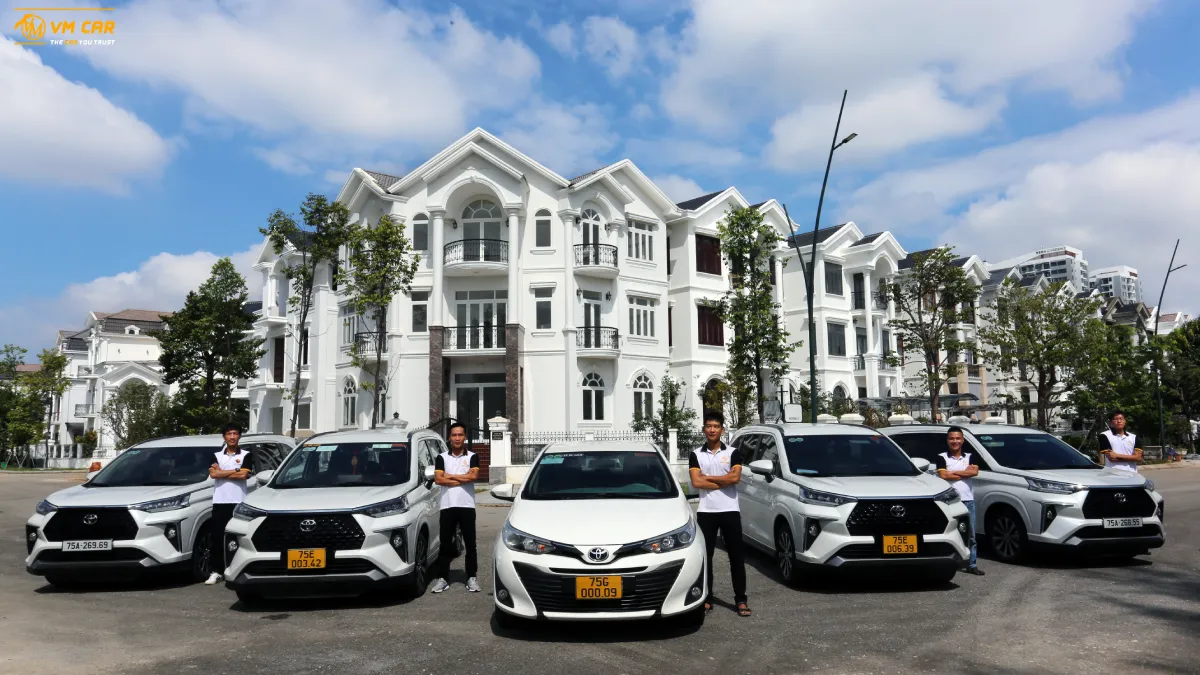
Taxis and ride-hailing services are also practical choices for a simple one-way journey. A private car can be more useful if you want the driver to wait while you explore.
If you prefer to use a taxi or ride-hailing service, here are some popular options to consider:
- Mai Linh Taxi
- Vinasun Taxi
- Xanh SM
- Grab
4. Tips for visiting Marble Mountains in Da Nang
For Marble Mountains Da Nang, start early if possible. The weather is usually more comfortable in the morning, and you can avoid some of the busiest periods.
Wear shoes with good grip. Many paths contain stone steps, and some surfaces can become slippery after rain.
Bring drinking water. The climb is not extremely long, but the combination of heat, stairs, and humidity can make the walk tiring.
Dress respectfully. Several pagodas and shrines are active religious places. Clothing that covers the shoulders and knees is a good choice.
Use the elevator if you need to save energy. It is especially useful for older travellers or anyone who finds steep stairs difficult.
Allow at least two to three hours for a focused visit to Thuy Son. Add more time if you want to visit Am Phu Cave, the stone carving village, and Non Nuoc Beach.
Be careful inside caves. Rock surfaces can be uneven, and some passages have low ceilings or narrow steps.
Do not rush through the pagodas. Take a moment to observe the architecture and the relationship between the temples and natural rock formations.
Keep the area clean. Carry your rubbish until you find a suitable bin and respect the quiet atmosphere around religious sites.
For travellers researching Marble Moutains Vietnam, the best approach is to combine comfortable transport with a realistic sightseeing schedule. This avoids rushing between the different areas.
5. Suggested one-day itinerary for Marble Mountains Da Nang
Here’s a suggested one-day itinerary for Marble Mountains Da Nang:
- 8:00 AM: Start from your hotel in Da Nang or Hoi An by private car. An early departure gives you cooler conditions for walking.
- 8:30 AM: Arrive at Thuy Son, get your entrance ticket, and start exploring. You can take the elevator if you prefer to avoid some of the stairs.
- 8:45 AM: Explore the historic Tam Thai Pagoda and its surrounding paths. Spend a little time appreciating the quiet mountain setting.
- 9:15 AM: Continue to Huyen Khong Cave and explore its natural openings, shrines, and limestone formations.
- 10:00 AM: Visit Linh Ung Pagoda and enjoy the views from the mountain. Keep the visit relaxed rather than rushing between attractions.
- 10:30 AM: Stop at Vong Giang Dai, a viewpoint offering panoramic views. This is also a good place to take a short break.
- 11:00 AM: Descend to Am Phu Cave and explore its symbolic heaven-and-hell route. Allow enough time to walk carefully through the darker sections.
- 12:00 PM: Return to the lower area and have lunch at a local restaurant. Da Nang specialities such as Mi Quang, seafood, or banh xeo are good choices.
- 1:30 PM: Visit Non Nuoc stone carving village and see local stone carving traditions. You can also browse smaller souvenirs.
- 2:30 PM: Relax at Non Nuoc Beach after the mountain walk. A short break here can make the afternoon much more enjoyable.
- 4:00 PM: Return to Da Nang and relax in the comfort of your private car, or continue to your next destination.
If you are short on time, we recommend focusing on Thuy Son and Am Phu Cave, as they are among the main highlights of Marble Mountains. This shorter visit allows you to experience the most important sights without spending the whole day there.
6. Conclusion
Marble Moutains in Da Nang brings together nature, Buddhist heritage, history, caves, and traditional craftsmanship in one destination. Thuy Son is the best starting point, especially for first-time visitors, while Kim Son, Moc Son, Hoa Son, and Tho Son reveal different sides of the complex.
The 2026 reference entrance fees remain affordable, and the site is close enough to central Da Nang for a half-day trip. With comfortable shoes, an early start, and a little planning, the visit can be both enjoyable and easy.
For travellers exploring Marble Moutains Vietnam, Da Nang offers a convenient base for combining the mountains with Hoi An, Non Nuoc Beach, and other Central Vietnam highlights. VM Car hopes this guide helps you plan your visit with greater confidence and make the most of your time in Da Nang.